
You’re scrolling through messages, reading comments, or chatting with friends when suddenly you see “SMH.”
No explanation. No emojis. Just those three letters.
So, what does it mean?
Understanding SMH meaning in text is important because this slang appears everywhere—WhatsApp, Instagram, TikTok, Snapchat, Twitter, and even workplace chats. Sometimes it’s playful. Other times, it’s rude. And occasionally, it can feel confusing or even offensive if misunderstood.
In this article, you’ll learn exactly what SMH means in text, how people use it online, when it’s okay to say it, and when you should avoid it. We’ll also cover examples, tone differences, professional usage, dating apps, and how to respond correctly.
By the end, you’ll never misread SMH again.
Definition & Meaning of SMH
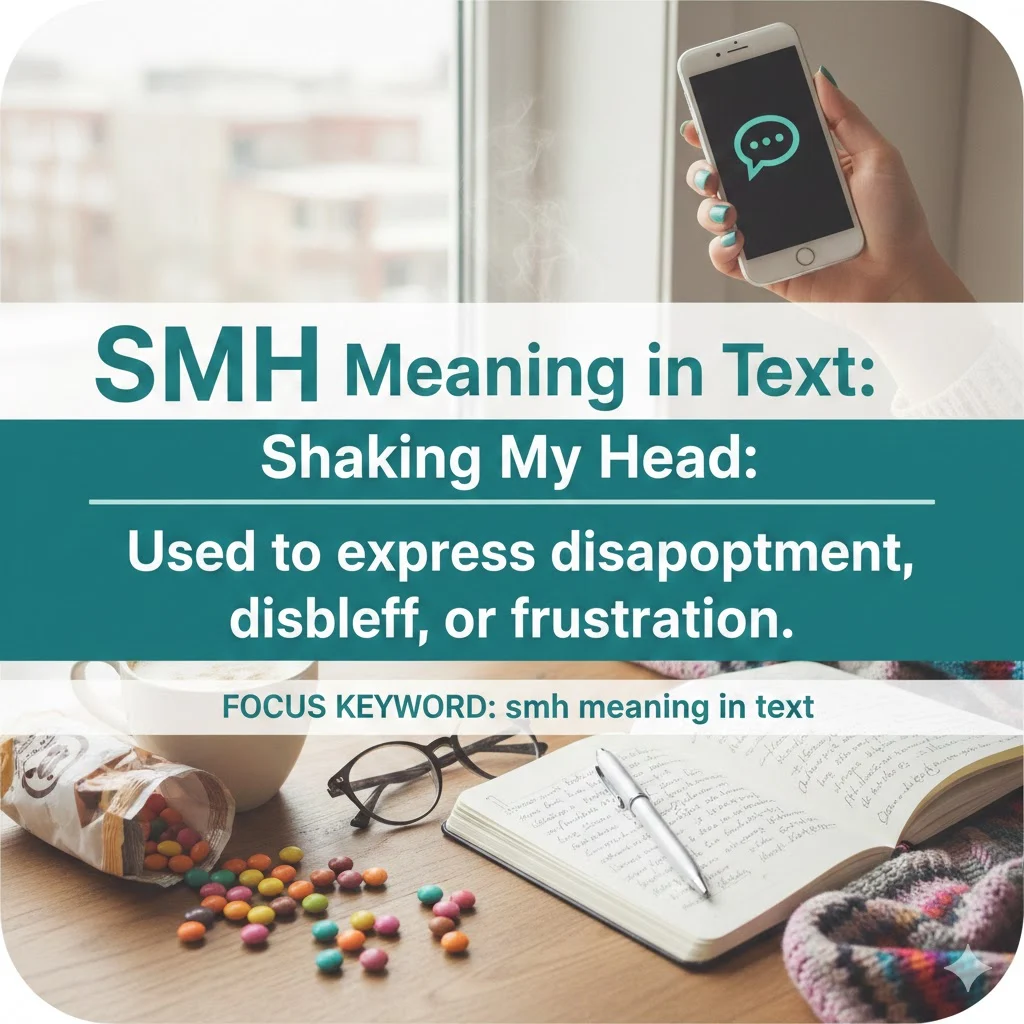
SMH stands for “Shaking My Head.”
It is used to express:
- Disappointment
- Disapproval
- Disbelief
- Mild frustration
- Silent judgment
In texting and online chat, SMH replaces a physical reaction—the act of shaking your head when someone does or says something foolish.
Simple Meaning
SMH = I can’t believe this / That’s disappointing / Seriously?
Text Examples
Friend chat:
“He forgot his own birthday again. SMH.”
Social media comment:
“People still believe that? SMH.”
Gaming chat:
“You rushed without backup… smh.”
Key Points
- SMH is reaction-based slang
- Tone can be light or harsh
- Context decides whether it’s funny or insulting
Background & History of SMH
The phrase “shaking my head” existed long before the internet. People have always shaken their heads to show disagreement or disappointment.
How SMH Became Popular
- Early chat rooms and forums
- SMS texting with character limits
- Twitter and meme culture
- Gaming and reaction-based chats
Why It Spread So Fast
- Short and efficient
- Easy emotional expression
- Fits casual digital language
- Works across cultures
Over time, SMH evolved from literal action to emotional shorthand. Today, it’s one of the most recognized internet acronyms worldwide.
Usage in Different Contexts
The meaning of SMH in text changes depending on where and how it’s used.
Texting & Messaging
Most common usage.
Examples:
- “You wore sandals in the rain? SMH.”
- “You didn’t save the file? smh.”
Tone: casual, judgmental, or joking.
Social Media
Often used in:
- Comments
- Captions
- Quote tweets
Examples:
- “Still spreading fake news. SMH.”
- “SMH at people who don’t use turn signals.”
Tone: critical or sarcastic.
Gaming
Used to criticize poor gameplay decisions.
Examples:
- “You ignored the objective. SMH.”
- “Why rush solo? smh.”
Tone: annoyed but common.
Casual vs Professional Usage
| Context | Appropriate? | Notes |
|---|---|---|
| Friends | Yes | Normal slang |
| Social media | Yes | Often sarcastic |
| Gaming | Yes | Very common |
| Work emails | No | Unprofessional |
| Client messages | No | Avoid completely |
Professional Communication
Using SMH in professional settings is risky.
Why It’s Inappropriate
- Sounds judgmental
- Lacks clarity
- Can offend colleagues
- Feels unprofessional
Bad Example
“You missed the deadline, smh.”
Better Alternatives
- “Please review the deadline.”
- “Let’s be more careful next time.”
- “There seems to be a misunderstanding.”
Rule of Thumb
If you wouldn’t say it in a meeting, don’t text it at work.
Hidden or Offensive Meanings
SMH is not offensive by default, but it can easily sound rude.
When It Feels Offensive
- Used toward strangers
- Used in serious conversations
- Used repeatedly
- Used without explanation
Risky Example
“That’s your opinion? SMH.”
Safe Example
“SMH 😂 that was hilarious.”
Tone Control Tips
- Add emojis to soften it
- Use lowercase “smh” for casual tone
- Avoid it during emotional discussions
Usage in Online Communities & Dating Apps
In online spaces, SMH is a strong emotional signal.
Dating Apps
Can be playful or a red flag.
Examples:
- “You hate pizza? SMH 😂”
- “No communication for days? smh.”
Tip: Use sparingly. First impressions matter.
Online Communities
Forums and comment sections use SMH to:
- Call out bad behavior
- Express disagreement
- React to misinformation
Example:
“Read the rules before posting. SMH.”
Comparison with Similar Terms
| Term | Meaning | Tone | Usage |
|---|---|---|---|
| SMH | Shaking My Head | Disapproval | Text, social |
| LOL | Laugh Out Loud | Funny | Casual |
| OMG | Oh My God | Surprise | Universal |
| Facepalm | Embarrassment | Visual reaction | Memes |
| SMDH | Shaking My Damn Head | Strong | Informal only |
SMH is more judgmental than LOL and less aggressive than SMDH.
10 Slang Terms & Acronyms Related to SMH
- SMH – Shaking My Head
- SMDH – Shaking My Damn Head
- SMFH – Shaking My Freaking Head
- Facepalm – Embarrassed reaction
- BRUH – Disbelief or disappointment
- IDK – I Don’t Know
- WTF – Shock or anger
- FR – For Real
- IKR – I Know, Right?
- OMG – Surprise or disbelief
How to Respond to SMH
Your response should match the tone.
Casual Responses
- “I know, right?”
- “My bad 😂”
- “Yeah… lesson learned.”
Funny Responses
- “Guilty as charged.”
- “Don’t judge me 😅”
Professional Responses
- Ignore slang
- Respond politely
- Address the issue directly
Privacy-Conscious Response
- React with emoji instead
- Change topic calmly
Regional & Cultural Differences
SMH is globally recognized, but tone varies.
United States & UK
- Common and casual
- Often sarcastic
Asia & Non-Native English Regions
- Can be misunderstood
- May seem rude
Example Difference
“SMH”
US teen: playful judgment
Non-native speaker: confusion or offense
Clarity matters across cultures.
FAQs
Q1: What does SMH mean in text messages?
It means Shaking My Head, showing disappointment or disbelief.
Q2: Is SMH rude?
It can be, depending on tone and context.
Q3: Can I use SMH at work?
No. Avoid slang in professional communication.
Q4: What’s stronger than SMH?
SMDH or SMFH, but they’re more aggressive.
Q5: Is SMH still popular?
Yes. It’s widely used on social media and messaging apps.
Q6: Does lowercase “smh” change meaning?
Lowercase often feels more casual or softer.
Conclusion
Understanding SMH meaning in text helps you navigate online conversations with confidence. While it’s a simple acronym, its tone can range from playful to judgmental depending on context. SMH works well in casual chats, social media, and gaming, but it’s best avoided in professional or sensitive conversations. Always consider your audience before using slang, and add clarity when needed. When used correctly, SMH is an effective way to express emotion without saying much at all. Knowing when—and when not—to use it makes you a smarter, more respectful communicator.