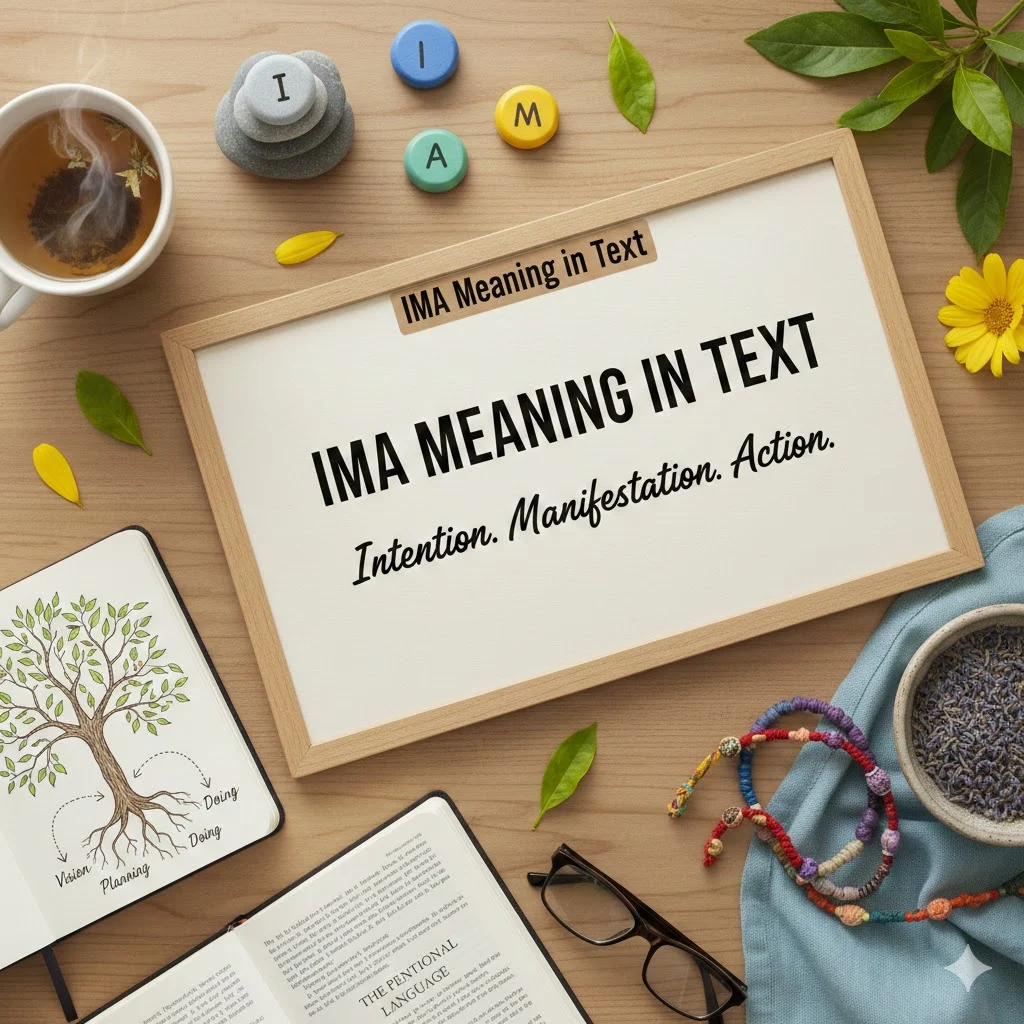

If you’ve been texting, scrolling through social media, or chatting in online forums, you might have seen IMA and wondered what it means. Acronyms like IMA are everywhere in online communication, making texting faster and more playful—but they can also cause confusion if you’re unsure of the meaning.
This article explains IMA meaning in text, its origins, usage in different contexts, and how to respond appropriately. Whether you’re a teen, young adult, or professional navigating casual or online conversations, this guide will help you understand IMA and communicate confidently.
Definition & Meaning of IMA
IMA is a common texting acronym, most often standing for “I’m About”, “I’m Going To”, or occasionally “I’m Mad”, depending on context.
- I’m About: Indicates readiness or intention to do something.
- I’m Going To: Shows future action or plan.
- I’m Mad: Less common, used to express anger or frustration in a chat.
Examples in Dialogue:
Casual chat:
Alex: “You coming to the party?”
Jamie: “IMA, give me 10 mins 😎”
Social media comment:
“IMA post my artwork tonight! 🎨”
Key Points:
- The meaning of IMA depends heavily on context.
- Emojis often help clarify the intended meaning.
- Using IMA incorrectly can lead to misunderstandings, especially in professional settings.
Background & History of IMA
The acronym IMA emerged from texting and early online messaging culture. Like other shorthand expressions, it became popular among younger users seeking faster ways to communicate.
- Origin: Likely developed in SMS texting and online chatrooms.
- Evolution: Spread to social media platforms like Instagram, Snapchat, Twitter, and Discord.
- Cultural Influence: Internet slang, memes, and online gaming communities contributed to its adoption.
Regional Usage:
- English-speaking countries mostly interpret IMA as “I’m About” or “I’m Going To.”
- Some regions may use it casually to indicate impatience or frustration (“I’m Mad”).
Understanding its background can help prevent miscommunication across different communities.
Usage in Different Contexts
IMA is versatile, and context defines its meaning.
Texting & Messaging:
- Friends: casual plans, playful messages.
- Example:
“IMA head to the store, need anything?”
- Posts, comments, and captions for informal communication.
- Example:
“IMA share my new playlist tonight 🎧”
Gaming:
- Indicates action or intention in gameplay.
- Example:
“IMA take the sniper spot in the next round”
Casual vs Professional Contexts:
| Context | Usage Example | Notes |
|---|---|---|
| Casual Chat | “IMA grab pizza, wanna join?” | Friendly, informal |
| Social Media | “IMA upload my vlog today” | Fun, casual tone |
| Gaming | “IMA defend the base” | Action-oriented, playful |
Professional Communication
In professional settings, using IMA is generally not recommended. Slang can be unclear or informal, and not everyone may understand the acronym.
Safer alternatives:
- Instead of “IMA finish the report,” say: “I’m going to finish the report.”
- In emails or messaging apps like Slack, avoid acronyms that could confuse colleagues.
Tips:
- Stick to full words for clarity.
- Use slang only with trusted colleagues or in informal internal chats.
- Emphasize readability over casual tone in professional messages.
Hidden or Offensive Meanings
Although IMA is mostly harmless, tone and context can alter its meaning.
- Risky Usage: Misinterpretation as anger or frustration.
- Safe Usage: Casual chat, gaming, or social media posts with friends.
Examples:
- Risky: “IMA at the meeting soon” (unclear to professional recipients).
- Safe: “IMA post this meme 😆”
Always consider audience, tone, and platform before using IMA.
Usage in Online Communities & Dating Apps
Online communities and dating apps use IMA to signal intention, humor, or future action.
Tips:
- Clarify meaning if there’s a chance of misunderstanding.
- Emojis paired with IMA can indicate tone.
Dialogue Example:
Sam: “IMA text you later, busy now 😅”
Riley: “No worries, talk soon!”
Dating Apps:
- Indicates interest or intention casually, e.g., “IMA message you tomorrow 😊”
Comparison with Similar Terms
| Term | Meaning | Tone | Usage |
|---|---|---|---|
| IMA | I’m About / I’m Going To | Casual | Texts, chats, gaming |
| BRB | Be Right Back | Casual | Online chats, gaming |
| TTYL | Talk To You Later | Casual | Texting, social media |
| IDK | I Don’t Know | Casual | Broadly used online |
Key takeaway: IMA focuses on intention or action, making it more proactive than IDK or TTYL.
10 Slang Terms & Acronyms Containing IMA
- IMA – I’m About / I’m Going To
- IMAF – I’m About to Freak
- IMAB – I’m About to Break
- IMAG – I’m About to Go
- IMAO – I’m About to Offer (or jokingly “In My Arrogance Out”)
- IMAQ – I’m About to Quit
- IMAGG – I’m About to Go Gaming
- IMAN – I’m About to Nap
- IMAW – I’m About to Win
- IMAS – I’m About to Sleep
How to Respond
Responses depend on context:
Casual:
- “Cool, IMA wait for you 😎”
- “IMA join you later!”
Funny:
- “IMA roll my eyes 😆”
Professional:
- “I’ll get to it shortly” (avoid acronym)
Privacy-conscious:
- React with an emoji instead of typing IMA.
Regional & Cultural Differences
- US & UK: IMA most commonly interpreted as “I’m About” or “I’m Going To.”
- Australia & Canada: May lean toward “I’m About” for casual plans.
- Non-native English speakers: Could misinterpret as anger (“I’m Mad”) or action, so clarify meaning.
Example:
“IMA head to the cafe” (US teen = casual plan, Australia teen = casual plan, Non-native speaker = maybe confusion)
FAQs
Q1: Can I use IMA in emails?
A: Only in informal internal chats. In formal emails, write the full phrase.
Q2: Is IMA offensive?
A: Rarely. Context and tone are crucial.
Q3: What platforms is IMA common on?
A: Instagram, Snapchat, TikTok, WhatsApp, and Discord.
Q4: Can IMA have multiple meanings?
A: Yes, mostly “I’m About,” “I’m Going To,” or less commonly “I’m Mad.”
Q5: Are there alternatives to IMA?
A: Full phrases like “I’m going to,” “I’m about to,” or “I will” are safer for clarity.
Q6: Can IMA be used professionally?
A: Only with colleagues who understand your informal style. Otherwise, avoid.
Conclusion
Understanding IMA meaning in text makes online communication faster, clearer, and more fun. Its meaning—usually “I’m About” or “I’m Going To”—depends on context, emojis, and platform. Always consider your audience, whether texting friends, posting on social media, gaming, or chatting in professional spaces. Use IMA responsibly, pair it with emojis to clarify tone, and opt for full phrases in professional settings. By mastering IMA, you’ll avoid misunderstandings, engage effectively online, and communicate with confidence in every chat or message.