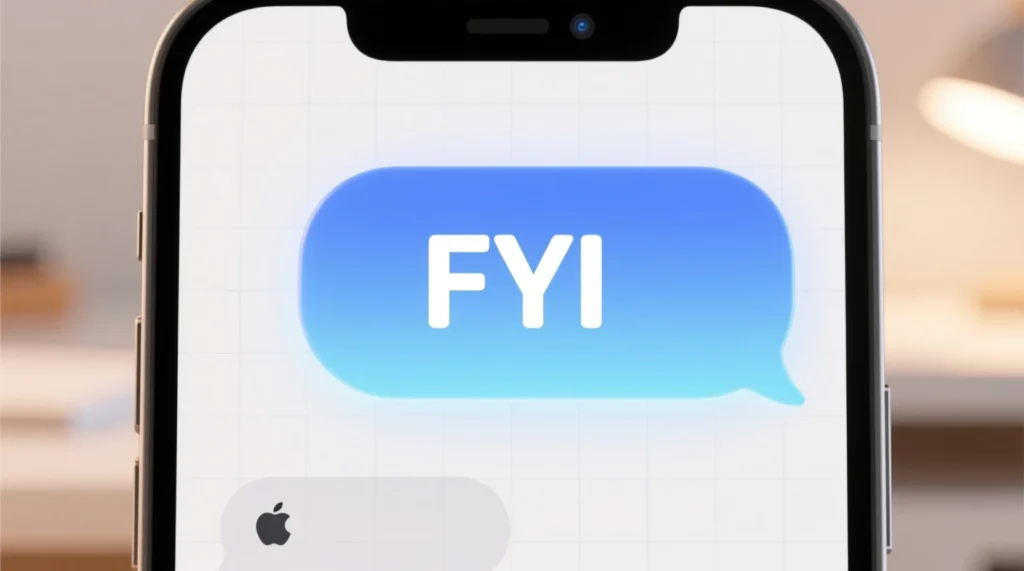

Ever been in a chat and suddenly someone messages you with “FYI”? If you’re not sure what it means, don’t worry. This acronym is used everywhere—from texting and social media to professional emails and work chats.
In this guide, you’ll learn everything about FYI meaning in text, how to use it correctly, when not to use it, and how different communities interpret it. Whether you’re a teen, a social media user, a gamer, or a working professional, this article will make FYI crystal clear.
Definition & Meaning of FYI
FYI stands for “For Your Information.”
It’s one of the most common acronyms in both casual texting and formal communication. It’s used to share details, updates, or facts that someone might find useful or important.
Key Points:
- FYI is informative, not emotional.
- It doesn’t require a response, though people often reply.
- Tone depends on context, especially in work chats.
Examples in Dialogue:
Casual chat:
Maria: “FYI, the café closes early today.”
Ben: “Oh, thanks!”
Group chat:
“FYI, I’ll be offline for a few hours.”
“FYI: New episode drops tonight!”
Background & History of FYI
The acronym FYI has roots in early telegraph messaging and later became popular in office memos long before texting existed. It was short, clear, and saved time—so it carried over into emails, instant messaging, and eventually social media.
How FYI evolved:
- First used in formal communication.
- Adopted in early email culture in the 1990s.
- Became mainstream in texting and online chats.
- Now used casually by teenagers and professionals alike.
Cultural influence:
TV shows, office culture, and digital communication norms helped make FYI universal and easily understood worldwide.
Usage in Different Contexts
FYI works in many situations, but the tone changes depending on who you’re talking to.
Texting & Messaging
- sharing updates
- giving reminders
- notifying someone of a detail
Example:
“FYI, your order arrived.”
Social Media
Used in captions, updates, or comments to inform followers.
“FYI, this hack really works!”
Gaming
Gamers use it to pass quick info.
“FYI, enemy is on the left.”
Context Comparison
| Context | Example | Notes |
|---|---|---|
| Casual Chat | “FYI, I’ll be late.” | Neutral and helpful |
| Social Media | “FYI: New update today!” | Informative tone |
| Gaming | “FYI, boss is weak to fire.” | Quick info |
| Work | “FYI, meeting moved to 3 PM.” | Formal & common |
Professional Communication
FYI is heavily used in professional spaces—but tone matters.
Sometimes FYI can sound cold, direct, or even passive-aggressive if not used carefully.
Good Professional Usage:
- “FYI, here’s the final report.”
- “FYI, your access has been approved.”
When to avoid FYI:
- When delivering criticism
- When talking to senior management
- When tone could be misread
Safer Alternatives:
- “Just wanted to let you know…”
- “Sharing this for your reference…”
- “Here’s an update…”
Hidden or Negative Interpretations
Though FYI isn’t offensive, tone can change how it feels.
Possible interpretations:
- Neutral: “Just informing you.”
- Dry: “You should’ve known this.”
- Passive-aggressive: “Why didn’t you know this already?”
Risky usage example:
“FYI, that’s not correct.”
This may sound rude or corrective.
Safe usage example:
“FYI, here’s the updated version 😊”
Adding context or emojis softens the message.
Usage in Online Communities & Dating Apps
FYI also appears in casual platforms, though less frequently in dating apps since it feels formal.
On dating apps:
“FYI, I might reply late tonight.”
On forums (Reddit, Discord, etc.):
“FYI, the link is broken.”
Tips:
- Keep it light.
- Add emojis if the message feels too serious.
- Avoid using FYI too often—it can feel distant.
Comparison with Similar Terms
| Term | Meaning | Tone | Best Used In |
|---|---|---|---|
| FYI | For Your Information | Neutral | Texting, work, social media |
| BTW | By The Way | Casual | Friendly texts |
| IMO | In My Opinion | Casual to neutral | Opinions |
| ICYMI | In Case You Missed It | Informative | Social media |
| FYSA | For Your Situational Awareness | Formal | Military / Corporate |
Quick Tip:
FYI is more formal than BTW but less formal than “For your reference.”
10 Slang Terms & Acronyms Related to FYI
- FYI – For Your Information
- FYSA – For Your Situational Awareness
- FYA – For Your Action
- FYE – For Your Entertainment
- ICYMI – In Case You Missed It
- BTW – By The Way
- NBD – No Big Deal
- TBF – To Be Fair
- TL;DR – Too Long; Didn’t Read
- IDK – I Don’t Know
How to Respond
Your reply should match the tone of the message.
Casual Responses
- “Got it!”
- “Thanks for the heads-up!”
- “Oh cool, FYI appreciated!”
Funny Responses
- “FYI, I love FYIs 😂”
- “FYI received loud and clear 🤣”
Professional Responses
- “Thank you for the update.”
- “Noted.”
- “Appreciate the information.”
Privacy-Conscious Responses
- React with 👍
- Keep replies short
Regional & Cultural Differences
FYI is used globally, but tone varies:
United States & UK:
- Common in both work and casual texting.
Asia:
- Seen mostly in professional settings; can sound too direct in casual chats.
Europe:
- Used in work emails, especially in English-speaking workplaces.
Example difference:
US: “FYI, here’s the link.”
Japan: “Just letting you know, here is the link.” (more polite, indirect)
FAQs
Q1: Is FYI rude?
It can be if used bluntly. Tone matters.
Q2: Can I use FYI in formal emails?
Yes, but keep context and tone in mind.
Q3: Is FYI slang?
It’s an acronym, not slang, and widely accepted.
Q4: Do I need to reply to FYI?
No, but replying is polite when context matters.
Q5: Is FYI used in texting by teens?
Yes, but less often compared to fun slang like LOL or BTW.
Conclusion
Understanding FYI meaning in text helps you communicate more clearly—whether you’re chatting with friends, posting online, or sending professional emails. Always consider your audience, add tone when needed, and use FYI to share helpful information without overwhelming the conversation.