
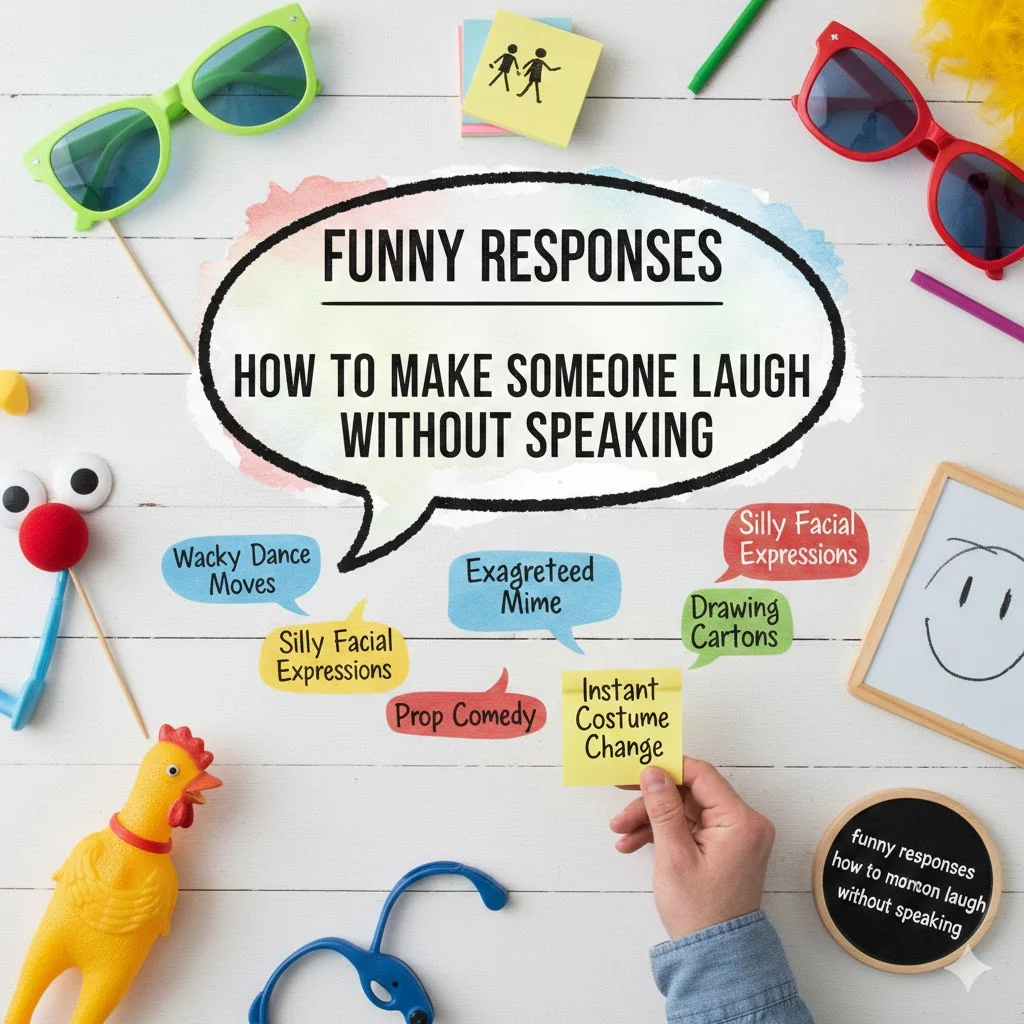

Laughter is universal, but did you know you don’t always need words to make someone laugh? Nonverbal humor has a unique power—it can break tension, create instant bonds, and make moments unforgettable. Whether you’re at work, home, or socializing, mastering funny responses how to make someone laugh without speaking can transform your interactions. This guide dives deep into every aspect of silent comedy, from facial expressions to gestures, mime, and more.
Understanding Nonverbal Humor
Nonverbal humor is all about using gestures, expressions, and body language to provoke laughter. Unlike spoken jokes, it relies on timing, exaggeration, and creativity. People respond to silent humor differently because it engages visual and emotional cues directly.
Why silent humor works:
- Universal appeal: Everyone can understand funny gestures, even across languages.
- Surprise element: Unexpected movements or expressions can be funnier than punchlines.
- Social bonding: Shared laughter without words strengthens connections.
Silent humor often combines physical comedy, mimicry, and subtle exaggeration. Think about comedians like Charlie Chaplin or Mr. Bean—they rely almost entirely on expressions and actions.
Funny Facial Expressions
Your face is a powerful tool in making someone laugh silently. Small changes in your eyebrows, eyes, or mouth can completely change a mood.
Techniques to try:
- Exaggerated eyebrows: Raise one eyebrow slowly for a comical reaction.
- Wide-eyed stare: Acts of mock surprise or shock often trigger laughter.
- Funny smirks or grins: Slightly exaggerated smiles convey humor instantly.
Example scenario: Pretend you’ve seen something shocking and freeze with wide eyes and a slightly tilted head. People will often laugh before you even move.
Practice tip: Stand in front of a mirror and try different expressions. Notice which ones feel natural yet funny.
Body Language Humor
Your entire body can be a canvas for silent comedy. Physical humor uses movement, posture, and timing to create laughs without words.
Key techniques:
- Exaggerated movements: Big, unexpected gestures grab attention.
- Comedic falls or “fails”: Pretending to trip or stumble (safely) triggers laughter.
- Mimicking actions: Copying someone’s gestures in a playful way can be hilarious.
| Body Language Technique | How to Use It | Laugh Factor |
|---|---|---|
| Comedic walk | Walk exaggeratedly slow or fast | High |
| Pretend struggle | Carry something invisible or pretend to trip | Medium |
| Mock actions | Imitate a friend’s behavior in an exaggerated way | High |
Pro tip: Timing is critical. A slow build-up followed by a sudden movement often works best.
Funny Hand Gestures & Gestural Comedy
Hands can be surprisingly expressive when used for silent humor. Simple movements often create big laughs.
Popular gestures for silent humor:
- Thumbs-up in odd situations – makes everyday actions look absurd.
- Over-the-top pointing – exaggerates focus or attention on something trivial.
- Invisible objects – pretending to juggle, lift, or throw invisible items.
Example: Pretend to offer someone a “cup of air” with exaggerated care. The absurdity of the action often triggers laughter.
Pro tip: Combine hand gestures with facial expressions for maximum comedic effect.
Mime and Silent Acting
Mime is a classic way to make people laugh silently. It’s the art of storytelling without words.
Basic mime techniques:
- Invisible objects: Pretend to be trapped in a box, pull an invisible rope, or push an invisible wall.
- Exaggerated emotions: Over-the-top happiness, fear, or confusion works best.
- Repetition: Repeat a funny action slightly differently each time for increasing hilarity.
Scenario example: Mime a routine like brushing teeth, but pretend the toothpaste is absurdly long or slippery. The audience will catch the joke instantly.
Practice tip: Start small in front of a mirror, then try in front of friends. Observe which actions get laughs consistently.
Silent Jokes, Pranks, and Challenges
Silent humor isn’t limited to gestures; it can also be playful pranks and challenges.
Ideas for silent pranks:
- Freeze in place: Hold a funny pose and watch people react.
- Mimic objects: Pretend to be a chair or statue.
- Unexpected expressions: Make a serious face during a silly moment.
Silent challenges:
- No words for a day: Try communicating only through gestures or facial expressions.
- Funny mimicry games: Copy your friends’ actions silently for laughs.
Tip: Keep it lighthearted. The goal is laughter, not embarrassment.
Funny Eye and Facial Gestures
The eyes are often called the windows to humor. Even small changes can make someone laugh.
Effective techniques:
- Wink at the right moment – unexpected winks create instant humor.
- Eye rolls – exaggerated rolls signal playful sarcasm.
- Cross-eyed looks – dramatic eye movements can be hilarious in context.
Example: During a serious conversation, suddenly widen your eyes and tilt your head in mock horror. The contrast alone can trigger laughter.
Pro tip: Pair eye gestures with subtle hand movements for extra impact.
Using Nonverbal Humor in Social Situations
Silent comedy works in multiple social contexts. Knowing where and how to use it is important.
Practical uses:
- Making friends laugh: Use small gestures or expressions during casual hangouts.
- Workplace humor: Light gestures or facial expressions can break tension without being disruptive.
- Public spaces: Playful silent antics, like miming a funny scenario in line at a café, often amuse strangers.
Tip: Observe reactions. Humor is about connection; adapt your gestures to the audience.
Exercises to Improve Silent Comedy Skills
Like any skill, silent humor improves with practice. Try these exercises:
1. Mirror Practice
- Spend 5–10 minutes a day experimenting with expressions and gestures.
- Note what looks funny and natural.
2. Observation Exercises
- Watch comedians, videos, or daily interactions.
- Analyze what gestures or movements trigger laughter.
3. Rehearse Scenarios
- Pretend to be in everyday situations with exaggerated actions.
- Example: Pouring coffee in an invisible cup with dramatic care.
4. Record Yourself
- Use a phone to film your expressions and gestures.
- Evaluate timing and exaggeration.
Table: Silent Comedy Exercises
| Exercise | Purpose | Duration |
|---|---|---|
| Mirror practice | Facial expressions | 5–10 min daily |
| Observation | Learn triggers | 10–15 min daily |
| Scenario rehearsal | Gesture timing | 15–20 min |
| Self-recording | Evaluate performance | 10 min per session |
Funny Silent Ideas for Social Media
Silent humor thrives online, especially in short videos and visual content.
Ideas for social media content:
- TikTok/Reels videos: Short, exaggerated gestures or mimed actions.
- Memes without text: Use images of funny expressions or hand gestures.
- Silent challenges: Encourage followers to mimic your gestures or facial expressions.
Tip: Silent humor often travels faster online because visuals are universally understood.
Tips for Mastering Silent Humor
- Exaggerate wisely: Subtle exaggeration works, but too much can feel unnatural.
- Timing is key: Pause before the punchline movement.
- Engage your audience: Make eye contact or invite reactions.
- Mix techniques: Combine facial expressions, gestures, and mime for richer humor.
- Practice regularly: Silent comedy improves with consistent effort.
Quote to remember:
“Laughter is the shortest distance between two people.” – Victor Borge
Conclusion
Mastering funny responses how to make someone laugh without speaking is about observation, practice, and creativity. Facial expressions, gestures, mime, and playful pranks all contribute to powerful silent humor. Start small, experiment with different techniques, and watch how laughter spreads around you without a single word.
Silent humor is more than a party trick; it’s a way to connect, entertain, and bring joy. Try one technique today—your friends and family might be laughing before you even say hello.
Table Summary: Key Nonverbal Humor Techniques
| Technique | Examples | Best Use |
|---|---|---|
| Facial expressions | Wide eyes, smirk, eyebrow raise | Everyday humor |
| Hand gestures | Invisible objects, pointing, thumbs-up | Casual/social |
| Body language | Comedic walk, mimicry, mock struggle | Physical comedy |
| Mime | Invisible walls, exaggerated actions | Storytelling without words |
| Silent pranks | Freeze poses, playful mimicry | Friends/work |
| Eye gestures | Wink, eye roll, cross-eyed look | Subtle humor |
| Social media | Short silent videos, memes | Online audience |