
If you’ve ever texted someone and suddenly saw “DND” in their message, bio, or status, you might have wondered what it means. Acronyms like DND are everywhere—on Snapchat, Instagram, WhatsApp, Discord, and even in workplace chats. Because online communication moves fast, understanding DND meaning in text helps avoid awkward moments and improves your messaging experience.
Whether you’re a teen, gamer, student, or professional, learning what DND means (and when to use it) keeps your conversations smooth and respectful. Let’s break it down in a simple, friendly way.
Quick Answer
DND Definition: DND means “Do Not Disturb.”
It’s used in texting, online chats, games, and social media to signal that someone is busy, unavailable, or doesn’t want interruptions.
Example:
- Friend 1: “Can we call?”
- Friend 2: “Not now, DND.”
DND Definition & Meaning
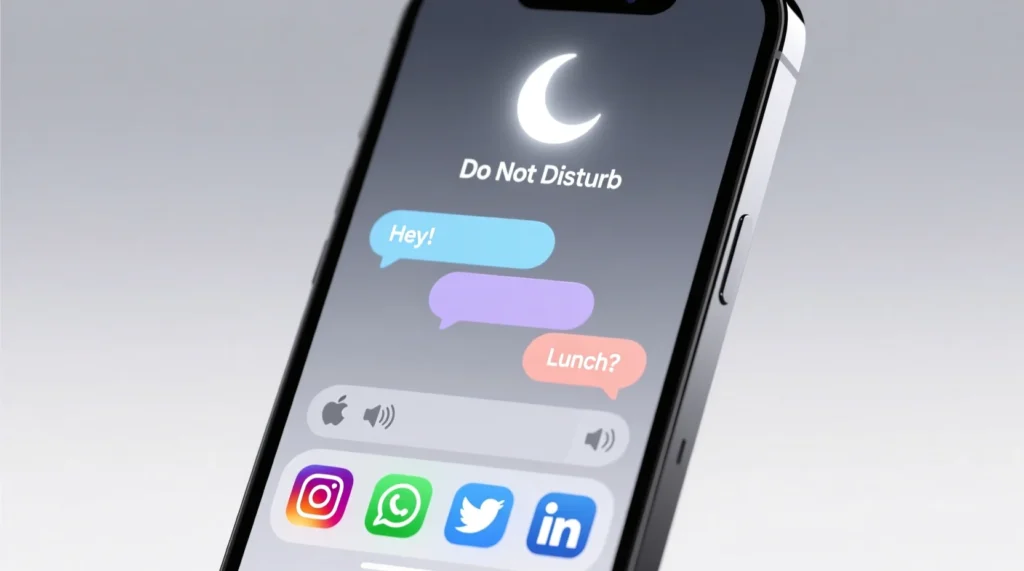
In simple terms, DND stands for “Do Not Disturb.” People use it to tell others they’re working, sleeping, studying, or simply don’t want anyone messaging them right now. It also appears on smartphones as a “Do Not Disturb” mode, which silences notifications.
What DND communicates:
- “I’m unavailable right now.”
- “Don’t message or call me.”
- “I need quiet time.”
- “I’m busy—will reply later.”
Real Chat Examples:
- Texting:
- Friend 1: “Are you joining the group chat?”
- Friend 2: “Later, DND.”
- Gaming:
- Player 1: “Invite sent!”
- Player 2: “Wait, DND. Finishing a mission.”
- Work Chat:
- Teammate: “Can you review this now?”
- You: “On DND for 30 mins. I’ll check after.”
Variations & Synonyms:
- DND status
- DND texting meaning
- DND abbreviation
- Do Not Disturb mode
- DND online chat meaning
Background & History of DND
The term DND originally came from telephone culture, where hotels and offices used “Do Not Disturb” signs to avoid interruptions. Over time, as technology evolved, DND made its way into:
- Mobile phones (Do Not Disturb mode)
- Online gaming platforms
- Texting apps & social media
- Workplace communication tools
By the late 2000s, DND became a common acronym among texters, gamers, and busy professionals.
Why DND became popular:
- People wanted quick ways to express unavailability
- Notification overload increased
- Online gaming and remote work boosted its usage
Today, DND is universal and instantly understood in digital communication.
Usage in Texts & Social Media
Here’s how DND appears across popular platforms:
| Platform | Example | Notes |
|---|---|---|
| “DND – focusing on myself for a bit ✌️” | Common in bios & captions | |
| Snapchat | “DND rn 😴” | Used in quick story replies |
| Status: “DND until evening” | Shows temporary unavailability | |
| Discord | Auto status: “DND” | Silence pings & alerts |
| TikTok | Comment: “She’s in DND mode 😂” | Used humorously |
Pro Tip:
DND sounds serious, so pairing it with emojis can soften the tone.
Professional Suitability
DND works well in professional settings, especially in:
- Remote work
- Meetings
- Focus sessions
- Time-blocking periods
Examples:
- “On DND for 1 hour. Will reply afterward.”
- “Setting DND mode to finish this deck.”
Safer Professional Alternatives:
- “Currently unavailable”
- “In a meeting”
- “Will respond shortly”
Use DND with teammates who understand your communication style. Avoid using it in formal emails.
Other / Hidden Meanings of DND
While “Do Not Disturb” is the most common meaning, DND can also mean:
- Dungeons & Dragons – the tabletop fantasy game
- Department of National Defense – government-related
- Do Not Delete – used in IT or project management
Comparison Table:
| Acronym | Meaning | Context |
|---|---|---|
| DND | Do Not Disturb | Texting, social media |
| DND | Dungeons & Dragons | Gaming / entertainment |
| BRB | Be Right Back | Chat, messaging |
| AFK | Away From Keyboard | Gaming |
| OOO | Out Of Office | Work / email |
Best Practices
When to Use DND:
- You’re busy or unavailable
- You’re studying or working
- You need personal time
- You want fewer interruptions
When to Avoid It:
- Talking to someone sensitive
- When tone might be misunderstood
- Professional emails
- First-time conversations
Tips:
- Add a time frame (e.g., “DND for an hour”)
- Add emojis to soften the message
- Explain briefly in work chats
Top Related Acronyms / Slang Terms
| Acronym | Meaning | Example |
|---|---|---|
| AFK | Away From Keyboard | “AFK for dinner 🍽️” |
| BRB | Be Right Back | “BRB, quick call” |
| OOO | Out Of Office | “OOO till Monday” |
| LOL | Laugh Out Loud | “LOL that clip 😂” |
| NVM | Never Mind | “NVM, solved it” |
| TTYL | Talk To You Later | “TTYL, busy rn” |
| TBH | To Be Honest | “TBH that was fun” |
| SMH | Shaking My Head | “SMH, no way 😭” |
| IMO | In My Opinion | “IMO, true” |
| IDC | I Don’t Care | “IDC anymore 😒” |
How to Respond to DND
Casual:
- “Okay, message me later!”
Funny:
- “DND mode activated 😂 got it.”
Professional:
- “Sure! Ping me when you’re free.”
Flirty:
- “DND? Okay, but save me a message later 😉”
Regional & Cultural Differences
- Asia: Often used with work cultures focused on productivity
- US/UK: Common in texting, gaming, and workplace tools
- Europe: Popular on WhatsApp and Discord
- Latin America: Understood mostly in English chats
DND is fairly global because it also appears as a feature in smartphones.
FAQ About DND
1. What does DND mean in texting?
DND means “Do Not Disturb”, used when someone is busy or unavailable.
2. Is DND rude to use?
Not usually, but tone matters. Add emojis or context to avoid sounding harsh.
3. What does DND mean on Snapchat?
It usually means the person doesn’t want to be disturbed right now.
4. What does DND mean in gaming?
It means a player is focused, busy, or avoiding notifications.
5. What’s the difference between DND and AFK?
DND = Don’t message me.
AFK = I’m not at my device.
6. Does DND mean someone is mad?
Not necessarily—it usually means they’re busy.
7. Is DND used professionally?
Yes, often during meetings or focus time.
Conclusion
DND is a simple yet powerful acronym that means “Do Not Disturb.” It’s used across texting, gaming, social media, and even workplace chats to express unavailability. Whether you need focus time, quiet time, or space, DND helps set clear expectations in a fast-paced digital world.
Understanding the DND meaning in text makes communication smoother, clearer, and more respectful—both online and offline.